
Early Times |
|||
A recollection by Harvey Mosty Written in the 1950s |
|||
Your comments or if you have additional information to share, would be gladly received. You can write me at James Craft, 2783 Bandera Hwy., Kerrville, TX 78028 or email me at jgraphix@ktc.com. |
|||
 |
|||
This
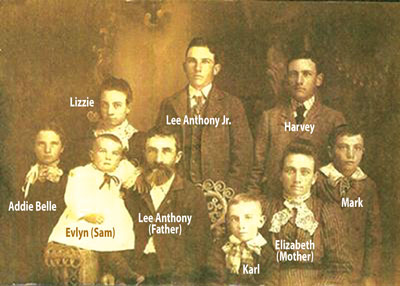
photo and text were taken from the The photo was taken about 1898, showing the L.A. Mosty family who arrived in Kerr County a year earlier. In front are - from left: At rear are - from left: |
|||
GENEALOGY Lee Anthony Mosty- Elizabeth Bean- Lee Anthony Mosty and Elizabeth Bean m
Lee Married Julie Hodges November 4, 1908. Three boys living. One boy and 2 girls died. Harvey married Lee Hodges May 30, 1909. Three girls. Elizabeth Mosty married James S.A. Spicer. Two boys. Mark Mosty married Mae Spicer. One girl, three boys. Addie Mosty married R. Hal Morris. One girl, two boys. Karl Mosty married Betty Burney. Two girls. Evelyn Mosty Married Agnes Stranch. Two girls, three boys Ruth Mosty married Street Hamilton. One boy, four girls. Lee Anthony Mosty died 11-25-1917. Early Times At Hepler, Dad bought a team of Percheron horses. One a nice animal, but he had to buy the other one; an ugly poor bony old pacing nag. His first job with the team was filling up an old cistern with dirt moved with a scraper. About the first thing to happen the bank caved in and the good horse fell in and broke its neck. The old pacing nag came in handy later. Lee and I were in the cellar one time eating raw fresh potatoes. I got a spud that had been poisoned with "Rough on Rats" poison. I had the first fit Lee told what happened. Dad rushed out and hitched the old nag to a two wheeled cart. The nag was supposed to make a mile in two minutes and I am sure she did on the trip to Hepler. The druggist took me in the back room and gave me a swallow of medicine and it bounced back with everything in me. And then another dose and if I had had socks on they would have come up that time. Anyway, I am still here. We moved to a farm near Hepler right on the MK&T railroad tracks. Many hours I watched the trains go by, and also could see them switching cars in the little town. The engines had a very large drum looking outfit on the smoke stacks. Late in the evening the trains would stop and the fireman would climb up to the Kerosene headlight and light her up and the brakies would lite up tail lites and lanterns and the conductor lit all the lamps in the passenger cars. Crop failures made hard times harder. Some shark lawyers came to the house when Dad was away and they talked Mother into signing some paper telling her it would save her home, etc. It turned out to be the opposite and the farm, livestock, implements and all were sold at Sheriff's sale. We loaded into a covered wagon and left Hepler on Thanksgiving day for the trip to Texas, 1894. On our trip from Kansas to Texas we camped Christmas Eve in Denison, Texas and spent Christmas day there. I remember well Dad Mosty had a sick headache that day. Sat there on the wagon tongue vomiting. That was the first time I can remember feeling sorry for anyone. I could not understand why Old Santa could not find us there. I had been told so many stories about the Old Fellow and saw his pictures in Kansas. We always looked out the window and could see his big tracks in the snow coming to the house and leaving again. At that time and age I learned two things that took all the joy out of my life. One was learning where money had to come from and the other that there was no Santa. From that time on I had no fun, no pleasures and did not get any joy out of living. Lived the rest of my life in debt and that was the family discourse at every meal and all my waking hours. "What we were going to do when we got out of debt and a home paid for." Went into Missouri. A blizzard, rain, sleet and snow caught us on a road, no timber and no wood. A farmer near where we were stuck in the mud came to us and took us to his house. The first nite they popped corn and made Taffy candy and with a hot supper we all thawed out. When the blizzard broke we started on our way. The farmer must have liked me very well. When we left he gave me a donkey and bridle. I felt big and very important to know I owned a donkey. A property owner all by myself and I would not have to walk any more. Lee, Dad, and I walked all the way. Mother and the three smaller kids rode in the covered wagon. A few days later it was decided we could not afford feed for the donkey. One day we camped near a small town and I was sent to town to sell my donkey and bridle. I rode the donkey up and down the street asking everyone if they would buy it. Late in the evening a store keeper came out and offered me 75 cents for the outfit. So I sold my donkey and bridle for six bits. When I got back to camp, my 75 cents went into the pot. That was the last of it for me. Weather got so cold and bad that it was decided mother and the three little ones should take the train for Lampassas to her mother's ranch. So that left Dad, Lee and I for the long walk. At a town I think was Neosho, Mo., anyway it was on the Neosho River, we camped and rested up. I was playing in a little ravine raking leaves and making hay stacks out of them. In raking the ground clean, I discovered a man's toes sticking up. There was a gang of gypsies camped there also. I showed some of them the find and they all gathered around the find and went to digging. They came up with a petrified man, loaded him in one of their covered wagons and started a show, charging a dime to see it. We came on in to Arkansas and an old nester there in the Ozarks took a fancy to one of our Percherson nags and offered us 110 acres of land for the mare. I do not know why we did not trade with him. Then into the Bad Lands of Southeast Indian Territory (now Oklahoma). The Indians all lived along the road and they had toll gates at every house. There were long poles hung across the road and the old Indians could pull them up from inside his our her window. They would look out and count your horses, wagons, kids, dogs, and charge a dime each to raise the pole and let us through. A snow storm came and we could no longer find the road which was only wagon tracks through the woods. We camped by a huge log and set it on fire. We slept on the ground and when we woke in the morning, we were completely covered with snow. One nite some horse thieves came along and were around our horses when Dad heard them. He jumped up and covered one of them with his six shooter. The man said he was freezing and had only come to the fire. The others all disappeared. The one asked if he could lie by the fire till morning. He had on a heavy overcoat and laid down with his back to the fire. Later in the night he came up screaming murder. The fire had rolled down and set his overcoat on fire right between the shoulders. Dad had a bucket of water setting by the front wheels of the wagon. He grabbed the bucket but it was frozen over. He got his ax and chopped a hole in the ice. He held the man down on his face and poured the ice water on his back. When he let the rustler loose he took off into the woods. That was the last of the horse rustlers. We crossed the Red River and came into Texas through Dennison. After crossing the Red River I saw my first Live Oak Tree. Sure looked good to me. Had never seen a broadleaf evergreen before. We arrived at the Bean Ranch early in March 1895. Lee and I were sent to town staying with our grandmother and entered school for the first time. At the close of school Lee and I each earned a medal. Our Aunt Mosty who was our age had went the entire term out, did not get a medal. Grandpa Bean got mad and bought her a gold medal and bought Lee and I each a cotton hoe and told us we were so darn smart he wanted to see what we could do with a cotton hoe. While at school I ganged up with some other bad boys. Every town then had open land just out of town called the "Commons". Every family who could afford a milk cow grazed them on the common during the day. Kids were sent out after school to round up the cows and bring them home. The gang I joined would gang up on the boys sent out and beat them up. I learned to fight real good and had lots of fun. Dad cleared about 30 acres of mostly prairie land and planted it to cotton. Lee and I used our hoes all summer. When the crop was all picked in the fall we had four bales of cotton. It took 1800 pounds of lint cotton then to gin out a 500 pound bale. Now cotton runs half and half. The cotton sold for 4 cents a pound so our years work for the family brought about $80.00. To get the cotton ginned we had to agree to haul off the cotton seed off the gin yard. There was no sale for cotton seed and most gins had huge mountains of seed that the farmers would not haul away. In the fall of 1896, I planted my first crop. Dad and Lee had left for Menard, Texas hunting work. Granddad Bean furnished me a double shovel plow and showed me how to sow the oats and plow it in. He started me off keeping the front plow shovel in the furrow left by the rear shovel the previous round. I got about half through the field and it looked like I was not getting along fast enough, so I took to running both plows cutting 2 furrows at each round. When spring and summer came the oats planted according to Grandad Bean's instructions made a good crop. The rest that I had hurried on was nothing but weeds. I learned then to do everything right and as told by older people. Summer of 1897 Late summer we left Menard for Junction. Then on to Kerrville. Coming over the Divide there was no water except wells at the ranches. We stopped at a ranch owned by Captain Schreiner and Sidney Rees and Jack Rees was on the ranch at that time and he charged us 10 cents a bucket for water. Reaching Johnson Fork we camped a few days near Sunset School, our first stay in Kerr County. We came on to Kerrville and camped on the river about where Water Street Courts are now, located at 1100 Water Street. From A Street the river and back to Quinlin Creek was open land known as Tivy Flat. Later this land was fenced and put into a field for number of years. We bought the place later known as the Mosty Farm. Then went back to Lampassas to move what furniture and tools we had. Came back by wagon and set up our tent under the Live Oak Tree just across the San Antonio Road and west from the green house located now in the Southwest fence of the San Antonio Road. The house on the place then was located where Mr. Woods home now is located on lot #4. Mosty addition to Kerrville. We brought about a peck of peach seed from the Dick Huling seeding orchard which was located on the Lometo Road out of Lampassas. Lee and I planted these in a nursery row. Later a friend, Mr. J.W. Jump who lived in town became interested in Lee and I. He knew how to bud and graft. He came out and showed us how to bud the peach trees. This was the beginning of the Mosty Nursery. The trees were grown for home planting but there were no trees available then and neighbors began to come in and buy these trees. We of course planted more peach seeds and a variety of nursery stock. Lee and I purchased 29 acres of land in Center Point in 1908, for $2500.00, all on credit. On February 1, 1909, I loaded some plows etc. in a wagon, my trunk, a dry goods box which I had made a hinged cover for and put a tray in it. I camped and fatched there the rest of the winter and into the summer. I laid out about 20 acres and planted a pear orchard. There were no improvements on the place and no water. We leased a 6 acre garden for two years. It had a well and pump for irrigation. We used this water to plant and start our Nursery. On April 29, 1909, a hail storm struck and cleaned our Nursery out. Also the pear orchard. This happened again on March 31, 1911 and again on May 19, 1916 and also again in 1917. Lee and I quit school for this reason and were to go back to school just as soon as the home was paid for. I worked hard from 10 years old until I was 24. Did a grown man"s work from 12 on and when I left home on February 1, 1909 the old home was not paid for and Lee and I took on a debt of $2500.00. We bought our furniture, bedroom suite, cookstove, dishes, pots and pans, table and had some money left. A Mr. McElroy and Mr. Nelson had a merchantile store in Center Point and they fed us the first season all on credit. It was in August we took in our first cash. Sold some watermelons and later tomatoes our sales. Those days flour came in 24 and 48 pounds, sacks only. Sugar came in barrels and was weighed out by the merchant. Also crackers, coffee, apples, and dried fruits were handled in bulk. You could build a house for $150.00; usually started out with two front rooms, a shed room or "leanto" on the back a fire place; no ceilings; no screens etc. Lumber sold around $6.00 to $8.00 a 1000ft. Best flooring around $12.00. Water was carried or hauled from the river or a creek. Washing was done on a wash board, no wringer, a big pot for hot water and all clothes were boiled. The first boots I can remember having came from Montgomery Ward. They cost twenty-five cents and had a brass cap on the toes. The threshing machines were run by horse power. Took from 12 to 16 horses to pull the power. The farmer had to feed all horses and the wife had to feed all the men 3 meals a day. Besides the horses pulling the threshers, there were 6 to 8 wagons and teams and you always had a few loafers along and all had a horse and saddle. When the thresher stayed all night on a small farm it sure hit his little crop hard. The thresher owner took 10% of the grain for toll. The first steam outfit in Kerr County was brought in by the Rees family. Their farm was what is now Westland Addition. Also Bluebell hills from town creek to the river. The old engine is called a portable steamer. It had no traction and had to be moved with horses. It took about as many horses to pull the old engine as it did to run a separator, so the poor farmer was not much better off. Lee and I went to San Antonio, International Fair Excursion, $1.00 round trip. Left Kerrville early AM and back late at night. We walked from the old SA & AP Depot corner S. Flores and S. Alamo to the Fairgrounds. About night we walked back and then decided to walk downtown. Took our bearing at the court house. Walked the business district of Commerce and returned to the Courthouse. Had got turned around and did not know which way to go. I told Lee if I could see the Stars I could take the right course. So I climbed a light pole and spotted the North Star. About that time a policeman came along. We had a time explaining what I was doing up that pole. He looked us over and told us to beat it. We took off and reached old SA & AP depot without further trouble. Another family at the Baptist Church I should give a very nice bokay, was the J.L.S. Gammons. Mrs Ola B. Gammon, a most attractive and pleasant young woman was the organist. She treated us like real musicians, but I am sure it must have been an ordeal to have to listen to our discords. She with her sister, Miss Graves Dewees now live in the Peterson Addition. I am very grateful to them for their kindness to Lee and I when we were worthless greenhorn country kids. Lee and I were the first of our family to join a church. Our mother leaned to the Methodist so after Lee and I strayed over the good Baptist, she joined the Methodist Church and took all the other kids along with her. The Baptist at that time were using the Church building now the Mexican Baptist church at Houston and Jefferson. The building was then located where the Assembly of God Church is now located; Washington and Jefferson. The building was later moved to its present location. The Baptist preacher when we first attended church, was named Rankin (tho I am not positive this is right.). Anyway, he was s stocky man with a real beer keg belly or fallen chest. He wore jet black heavy suits, high celluloid collars, long swallow tailed coat. When he started his sermon, he would stand at one end of the pulpits and shout a word you could hear a mile, then slowly walk to the other end and yell the next word of the sermon; then go down in the lower end of his coat tail, come out with a handkerchief, wipe his sweating brow, gradually pick up speed and volume until the finished an hour or more later. Dismissed the brethren about 1 p.m., time Lee and I walked home we were tired and hungry as wolves. One true story the dear old minister told I will never forget. He was raised in Arkansas, said his daddy had an old razorback sow with a head and nose like a toothpick. He called the Arkansas hog "Arkansas Toothpick". Well he was just a boy and this particular old hog would get into the cornfield every day. They could not find a hole in the rail fence, so the ole man detailed the boy to find out how that sow was getting in. So one day he followed her at a great distance around over the pasture keeping low and out of her sight. The field had a steep cliff along the back side next to the pasture. After several hours of caution and maneuvering the old sow carefully eased to a big tree that had a huge grape vine growing in it. The old sow had chewed the grape vine off near the ground. She took the vine in her mouth, gripped it tight and backed up as far as she could. Then suddenly ran toward the edge of the cliff. She swung out over the field fence, then turned the grape vine loose and landed in the corn field. This was told from the pulpit for a true story and I will vouch for its verification. This was the type of the first preacher I ever listened to. About the turn of the century we had a place leased on the head of Camp Meeting Creek, now the back part of the Hays Ranch. It was my job to farm the little field and see after the cattle. Sometimes I would stay out there a whole week alone. There was a grove under a big Oak tree in the pasture. I used to camp near it for company. Do not know if it was an outlaw or who was buried there. Further up the Creek an old bachelor, Uncle Phil Bundick, had a small Cedar Break Ranch. He wore a heavy grey beard with side pokes. There was a long twist of beard poking out of each cheek. I used to visit and eat with him many times. Also there lived a family named Surber out in the woods. Black Jonnie he was called. The old Lady dipped snuff and he chewed tobacco. They had a top glass out of the kitchen window and on cold days they would sit around the wood cook stove and dip and chaw. They both could spit a stream thru that open window top glass without getting up out of their chairs. They had come from Tennessee to these hills. He was a great story teller. Told me of an old nester in Tennessee who had lost a member of his family. Said one day he was in town. The two doctors who had treated the deceased member, the man spotted the doctors standing on the corner. The old nester went to them pulled 2 sixshooters and proceeded to tell the doctors he was about to polish them off. Immediately someone poked the old nester in the back saying, "you shoot, I shoot!". More followed quickly and the old nester looked around and counted seven men lined up behind him. Said that is to many so dropped his guns back in his jeans until later and all silently and quietly walked away. November 1917 Lee and I purchased 30 acres near Kerrville and moved our nursery there. No hail has hit the place at Center Point since 1917. Several have occurred at Kerrville. In 1926 Lee and I purchased the 17 acre field where the greenhouses are located from our mother for $5000.00. 1941, we erected the office building and Flower Shop and the first greenhouse. Back to our moving on the farm at Kerrville. Only a few acres was in cultivation along the RR tracks. Large live oak trees like the trees along the road were scattered from this small field on down the valley to Legion. The rest of our place was heavily timbered. This was cleared by Mexicans for us. The road to town ran along the river under the hill from the present road. Lee and I went to school 3 months in the spring of 1898 and also about 3 months in the fall. This was the total time we went to school. In the late fall I came down with slow fever. Dr. Palmer made a visit, told what I had and how to treat it. That caused the end of my education. It was spring before I got up and out again. That winter the whole family came down with the flu except Dad and I. One dark cold stormy night Dad told me I would have to get help. I walked to the Harris Home, located on Schreiner Institute. Mrs Harris came home with me and one of the men, Marsh Harris, went for a doctor. Dr. Domingues who was a new comer to Kerrville was all he could find. Mr. Harris brought him out. That night twin babies were born. Both died at birth. Mother having flu and Pneumonia caused them to be born premature. The next A.M. Mr. Harris made a little casket and I helped him bury them under the large live oak just west of the windmill and well. Talk about troubles and hard times. I remember one day Lee and I went to the Anderson Brothers Store located near the RR depot. Mr. Guy Anderson waited on us. We wanted a pair of blue jeans each. Both pair costing less than a dollar. Mr. Anderson turned us down flat, would not sell us on credit. About 40 years later I met him. He was very friendly and hastened to tell everyone present that he knew Lee and I would make good. Such is life. The roads into Kerrville and the streets were all dirt and got very muddy when it rained. I drove a wagon up Water Street many times when mud was more than knee deep. There was no water works and no electric lites then in Kerrville. Later Captain Schreiner put in a light plant where the Ice plant is now located. He also had a flour and corn mill there. Also a cotton gin. He also built a dam on the river for power where the Methodist Assembly now is located and put in a pump and ran a pipe line to town. This was the first water works and it was river water. I dug the post holes and set the poles for the first telephone line out of Kerrville down the RR to our farm. July 16, 1900, a 16 inch rain fell here and Quinlin Creek washed out the RR bridge in town. The river came up under our house and we moved out that night and went to the hills. We set up our tent again this time on the hill near the present windmill. The river washed out the Railroad bridge below Comfort that night also. We bought a small house from Mr. Bragg Harris. It was located where Mr. M.F. Weston now lives. We made a deal with Mr. Will Council to move it and also our house on the river to the present location of the Mosty Old House. On August 2, 1902 Mr. Council brought Mr. Williford a freighter out with his team of about 16 horses to move the houses. He moved the Harris house before noon and after noon moved our house over. He stuck on the Railroad late that afternoon and a terrific rain storm struck at the same time. The train came into Kerrville at night. So the train was flagged down and held up until late in the night before we got the house off the track. Mr. Council and his men walked the Railroad into town and found Quinlin Creek over the tracks. Had to use sticks to locate the cross ties on the bridge as they crossed over. Lee Mosty drove cattle from South Texas up the trails from the time he and his brother Albert separated in Animos, Colorado that day in ? until he married our mother December 21, 1881. He became a cattle buyer and trader. Carried large sums of gold on buying trips. Said when he stopped at a ranch to round up and buy cattle he would hang his saddle bags in a tree near the Ranch house and leave them there while the big roundup was going on. Never thought of anyone stealing the money. In 1916 mother took a clipping from the San Antonio Express stating 35 years ago news items. It said "L.A. Mosty the Cattle King of Texas had married Miss Elizabeth Bean in Lampassas". When he moved to Kansas City and working for Swift and Co. he made many trips back to Texas buying cattle. On one of those trips to Ft. Worth he was slugged, robbed, and left for dead. He was found in a dark alley and taken to a hospital where he recovered. The police found an expensive watch that he was wearing in a Saloon keepers safe. The money was never found. The saloon keeper said some one had left the watch with him for safe keeping. He did not know the man who had left it. It was the watch that Lee now has. Several thugs were arrested but never convicted for the crime. I believe the names were McMulty, Rinttleman and another one. When we lived in Kansas the Cherokee strip was opened up for homesteads. Dad was down there and made the race and located and staked out a 160 acre homestead. He never went back to settle on the land. From when Lee and Albert Mosty separated in Colorado until Lee Mosty and Elizabeth Bean were married, Lee Mosty continued to drive cattle up the Texas trails. Soon he was buying and driving herds of from 5000 to 6000 cattle at a time up the trails. He drove to Kansas City. Said the old trail drivers always camped at the river and salted the cattle heavy. Then crossed them thru the river. They would drink lots of water in crossing and all the water that 5000 cattle drank added to the weight of the herd and this additional weight was sold as beef on the hoof. Lee Mosty used to buy many herds in south Texas. The Dewees family who had large ranches near Shiner was a headquarters for Lee Mosty on his buying trips (Mrs. Ola B. Dewees). Grammon, mentioned on another page of this article was a little girl at the time. Dad told me that many times he rocked her to sleep when he was in the Dewees home. They became close friends. Later drives were made to Dodge City, Kansas and shipped by rail to Kansas City. In driving up the trails, navigation was by the stars. From south Texas they would make calculations and take their bearings for Dodge city. This was followed and they never missed their destinations. They would make five to six miles a day. They knew all the rivers on the way and where crossings were located. Many times the rivers would be on a rise and the cattle had to swim. Dad could not swim but he would slide off his horse and take the horse by the tail and let the horse pull him across. A merchant in Lampassas named Andrew (Lee and I used to buy peach seed from him) told me about some of the early life of Lee Mosty. Said one time a gang of toughs in Lampassas sent word out to the Bean Ranch where Lee Mosty was staying that the next time he came to town they were going to get him. He immediately headed for town. Tied his horse before entering the town, got out in the middle of the street and walked down the street with a six shooter in each hand. No one was in sight. He said Lee Mosty went into all saloons and pool halls, but not a bad man showed up and not a shot was fired. He said he could show me bullet marks on several building corners in Lampassas that were made by Lee Mosty. That was about 1935. When Mr. Andrews told me this story. Mother Mosty's Dad was Mark Bean who died during the Civil war. Mother had a sister named Addie who was younger than mother. Addie died while a small child. Grandpa Bean known as "Soup Bean" after he came back from the war, married his brother's widow. He was our Mother's uncle and became her step father. He was a poor manager and soon heavily into debt mortgaged the ranch. It was sold at Sheriff's sale in Lampassas. Mother said her mother cried her eyes out about loosing the ranch and everything she had ever owned. Mother said L.A. Mosty went to the sale, bought the ranch and had it deeded back to her mother. This was before mother and dad were married. Back to 1900. After Lee and I quit school (nine months each in 3 different schools-first 3 months in a private school in Lampassas, spring 1895. Then 3 months in Mr. Remschel's private school, spring 1898. Then 3 months Tivy School, fall 1898.). I reached the 3rd grade; Lee did better. Dad bought a hay baler and Lee and I had to help him run it after our crops were in. In the fall he would go out baling for the public all over Kerr County. Of course we camped out during the week and usually came in for Sunday and to get more grub and supplies. One time we were baling for Mr. Gworge Walker below Center Point. One day Lee and I were leading the horses to the River for water. Lee was in front leading a Gray stallion that did most of the baling work. I was following leading another horse. For some unknown reason the horse Lee was leading kicked, hitting me in the forehead. I never new it or felt it. They carried me back in the field to the baler and I did not come to until next day about noon. They were baling without me and as soon as I came to I had to get up and go to work. My head was still hurting like blazes and where I fell on my back it was so sore and hurt so bad I could not straighten up. I fainted a few times from the pain but was back to normal in a few days. I never would have known what happened or how long I was out if they had not told me. Mr. J.W. Jump who showed us how to bud peach trees took great interest in Lee and I. He was a vegetable peddler. Had a light one horse spring wagon and went from house to house in town selling fruit and vegetables when in season. He would come out to the farm and buy fruit and vegetables from us, about 1903 or 04. He made a bargain with Lee and I that if we would grow and sell him watermelons he would see that we got the money for them provided we would buy some decent clothes and come to his Sunday School. He was a Campbellite and held SS in the old Union Church on Sunday afternoons. The church now across from the city hall. He was an old school teacher and also an old fashioned singing teacher, teaching do-re-me-etc. His church banned all musical instruments, vocal music only. Well in the fall he paid us the melon money being $25.00. Lee and I went to Schreiners Store, found Mr. A.B. Williamson, a clerk to fix us up. We each bought a suit, shoes, hat, underwear (long handles), and white stiff fashioned shirts that buttoned up the back with detachable celluloid collars. Had to have cuff links, collar buttons, etc. Well, when all was added up we had money left out of the $25.00. We kept our promise and went to the Sunday School. That was the first time I ever darkened the door of a church building. Mr. Jump lived on the corner of Park and?. He had singing classes (free) every Saturday night at his house practicing songs for Sunday School. Lee and I attended these regularly and became very interested. A family who lived on the Medina Road across from the present Saner Hill had a girl about our age. Lee took to her. They all walked as we did and Lee would go to the creek and see her across from Mr. Jumps house. The lady, a nice looking plump woman about 50. Well I took up with her and would help her across the foot log also. The log was several feet above the water. One night she lost her balance and depended on me to hold her. I got scared, broke and ran. I heard her hit the water just as I hit the bank running at full speed. The next summer Mr. Jump closed his little SS. He took Lee and I to the Baptist Church and introduced us. The good Baptists took us in like millionaires, asked us to sing in the choir and what a discord it must been. Some of the leaders of the church, most of them now gone. Mr. and Mrs. A.B. Williamson. The Morriss families, Grandpa and Grandma Morriss, Miss Patty Morriss, their daughter, (now Mrs. Carl Morriss' mother). A Mr. and Mrs. Howard. All were exceedingly kind and considerate of us. Mara Clayton, (now Ma Green) a young fine looking girl but she also was very nice to two green country Hicks. That first Sunday at the Baptist Church service and also the first time I had ever heard and organ played, Lee and I visited around among the other churches but always came back to the Baptist. We soon lived up with the church and was baptized in the River down from the Mosty Greenhouses in the lower end of the Schreiner Institute waterhole. Reverend Coughran was the preacher at that time. One winter around 1903 I went to Rock Springs to stay a month on Uncle Jack Homlyn's Ranch. The stage left Kerrville at noon and reached the head springs of the north fork about 10 at night. A Mr. Joy had a bunch of tents there for travelers. The place was called "Bone Yard". A tent for the Kitchen, a tent for the dining room, a tent for men and a tent for women. We had breakfast bout 4am and left immediately changing teams several times we reached Rock Springs that night. At the ranch an Englishman named Osborne did the cooking (no women on the ranch). I saw him bail venison hams from the ranchhouse and the magots would boil out and he would skim them off. I did not eat meat and the rest did not know what went on in the kitchen. One evening we were coming from the ranch to town and thunder storm came up. Lightening struck a phone pole and Uncle Jack stopped to fix it. He was a very small man. A man named Sherill came along and helped. He and Uncle Jack were pulling the wire when lightening struck again down the line. Uncle Jack did not feel it but it knocked Mr. Sherill out. Uncle Jack had been wearing rubber boots. Mr. Sherill could not understand why it knocked a big man like he was out and not even touch a runt like Uncle Jack. Uncle Jack did not tell him why. On the stage trip back there was a lady school teacher who got sea sick and did she suffer on that trip. Also a Mexican was a passenger and when we reached Bone Yard that night and supper was called, he came in a took a seat at the table. Mr. Joy took him by the collar and dragged him out. After the whites were fed, Mr. Joy asked him to supper. He said he was sick and would not eat. Breakfast came and Mr. Joy fixed his plate after we were out he again asked the Mexican to eat. Again he said no and would not come in. He was seated on the ground leaning back against a large tree. Mr. Joy went to the tent, got his six shooter and brought the Mexican breakfast and said "Eat Mexican". You never saw a meal go down so fast in all your life. |
|||
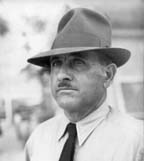 The following was originally
hand written by Harvey Mosty at the request of my mother, Marie Mosty.
I came upon it one day at my mom & dad's house many years ago and
took it upon myself to transcribe it taking care not to change any
grammatics, spellings, formatting and such as I wanted to retain the
uniqueness of his writing. If you're a long time resident of Kerrville
I think you'll find his accounts to be most interesting. And if you're
not, I'm sure you'll enjoy it just as well.
The following was originally
hand written by Harvey Mosty at the request of my mother, Marie Mosty.
I came upon it one day at my mom & dad's house many years ago and
took it upon myself to transcribe it taking care not to change any
grammatics, spellings, formatting and such as I wanted to retain the
uniqueness of his writing. If you're a long time resident of Kerrville
I think you'll find his accounts to be most interesting. And if you're
not, I'm sure you'll enjoy it just as well.